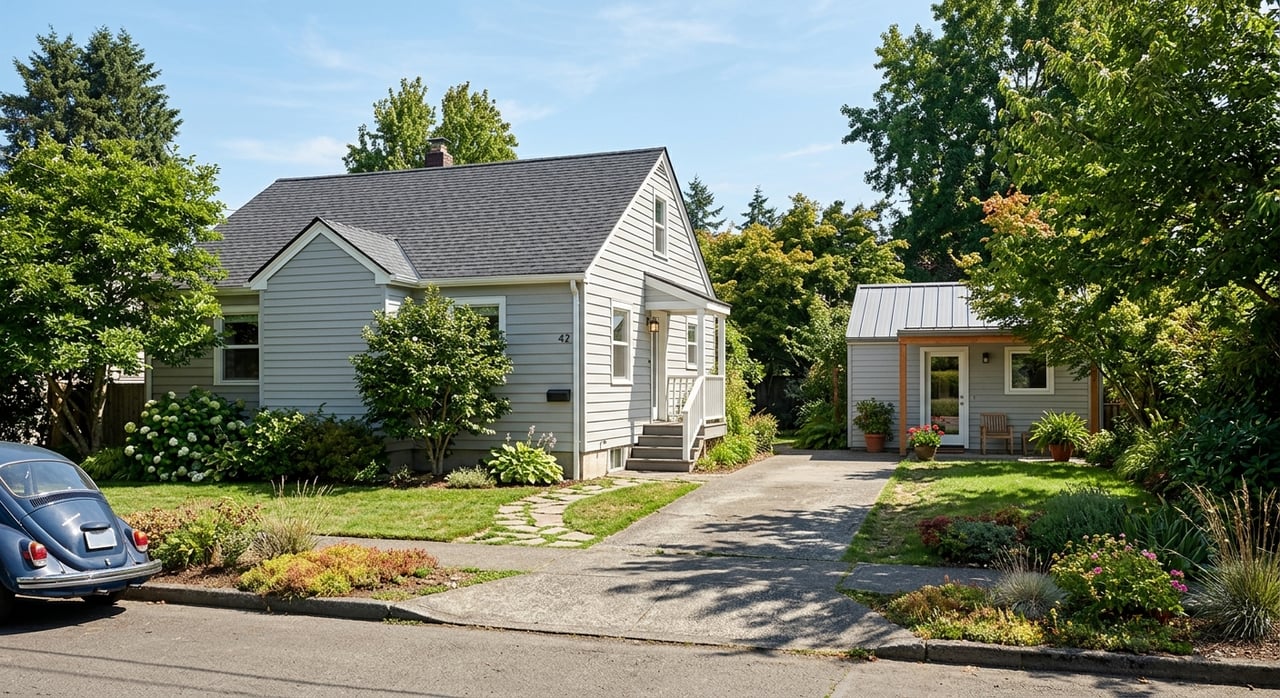
Wondering whether an Oakland property could do more for your budget than simply give you a place to live? If you are buying, renovating, or rethinking a home you already own, an ADU or a simple house-hacking setup may open up more flexibility than you expect. In this guide, you’ll learn how ADUs work in Oakland, what local rules matter most, and how this strategy can help offset ownership costs when it is planned carefully. Let’s dive in.
What ADUs mean in Oakland
An accessory dwelling unit, or ADU, is a secondary home on the same parcel as a primary residence. It can be created within existing space, attached to the main house, or built as a detached structure. The California Department of Housing and Community Development notes that ADU permits grew statewide from 1,336 in 2016 to 30,354 in 2024, which shows how mainstream this option has become in California (HCD ADU handbook).
In practical terms, an ADU can support several goals at once. You might use it for long-term rental income, housing for extended family, or a more flexible live-and-rent setup. Federal housing agencies also recognize ADUs as independent living spaces that may provide rental income in certain underwriting scenarios, which is one reason buyers continue to explore them.
How house hacking works
House hacking usually means you live in one part of the property and rent another legal space to help offset mortgage and ownership costs. In Oakland, that could look like living in the main home and renting a legal ADU, or occupying one space while renting a room or another permitted area. The key idea is owner occupancy with a legal rental component.
For many buyers, this approach is less about becoming a large-scale landlord and more about improving monthly affordability. If a property has an existing ADU, or if there is a realistic path to adding one, it may change how you evaluate the home’s long-term value. That said, actual results depend on rent levels, financing terms, insurance, taxes, construction costs, and local rental compliance.
Oakland ADU rules to know
Oakland states that most residential lots allow ADUs, but zoning still matters. The city says commercial zones, high-fire-risk areas, and creek areas can involve additional restrictions, so your first step should always be confirming the parcel’s zoning and site conditions through the city’s ADU resources (Oakland ADU rules).
Oakland also outlines several ADU paths for single-family properties:
- JADU, up to 500 square feet
- Category One, a conversion or rebuild of existing space with only a small entrance addition allowed
- Category Two, a new attached or detached structure
On multi-family lots, Oakland also recognizes a Category Three option. If you are comparing properties, these categories matter because they shape what may be physically and financially feasible on a given site.
Why Oakland buyers should look closely
Not every Oakland property offers the same ADU opportunity. A deep lot with garage access may present one path, while an existing lower-level space may suggest another. Some properties may also have older in-law units or detached structures that need legalization rather than new construction.
Oakland provides ADU amnesty and legalization materials for some unpermitted secondary units, which can be especially relevant in older housing stock (Oakland ADU legalization resources). If you are house hunting, this is why due diligence matters as much as layout. A property that appears to have rental potential on paper may still need significant permitting work before it can be used legally.
Pre-approved plans can simplify the process
One of Oakland’s more helpful tools is its library of pre-approved ADU plans for studio, one-bedroom, and two-bedroom dwellings. According to the city, these plans can help speed approval, lower permit fees, and reduce overall cost (Oakland pre-approved ADU plans).
If you already own a property and want a more predictable starting point, this can be worth exploring. A pre-approved plan does not eliminate due diligence, but it may reduce design and review friction. For buyers comparing homes with similar price points, a lot that works with a pre-approved plan may deserve extra attention.
State rules that affect costs and design
California’s current ADU framework gives property owners more flexibility than many people expect. The HCD handbook says parking requirements generally may not exceed one space per ADU or bedroom, whichever is less, and some ADUs near transit or in historic districts are exempt. It also notes that many conversion projects do not require setbacks, and default state rules allow a new detached ADU up to 1,200 square feet of interior livable space (California ADU standards).
There may also be fee advantages for smaller units. HCD states that ADUs of 750 square feet or less and JADUs of 500 square feet or less are exempt from certain impact fees, while larger units are charged proportionally. For budget-conscious homeowners, this is one reason small, efficient units can be attractive.
Rental rules matter for house hacking
If your goal is rental income, Oakland’s leasing rules are essential. The city says ADUs may be rented only for long-term stays of 30 days or longer, and a business license is required when the unit is rented (Oakland ADU rental requirements).
Oakland also notes that covered units include single-family homes that also have an ADU or JADU for rent registry purposes. That means your planning should include more than just design and construction. Before you lease a unit, you will want to confirm the current compliance requirements with the city.
Owner-occupancy questions
Many buyers ask whether they must live on site to build or rent an ADU. Under current state law, local agencies generally may not impose owner-occupancy requirements on most ADUs. JADUs are different, and special owner-occupancy rules may apply depending on whether sanitation facilities are shared, so Oakland property owners should verify the latest city guidance before moving forward (HCD owner-occupancy guidance).
This is an important distinction if you are comparing a JADU-style conversion against a full ADU. The right fit may depend not just on cost, but also on how you plan to use the property over time.
A practical Oakland due diligence checklist
Before you count on future rental income, work through the basics in order. Oakland’s permitting pages make it clear that site conditions and permit steps can affect feasibility.
Check zoning and site constraints
Start with the parcel itself. Oakland says you should verify zoning, creek conditions, high-fire area issues, tree preservation requirements, creek protection rules, and CALGreen standards before finalizing your plan (Oakland single-family ADU permit steps).
Choose a design path
Decide whether your project is a conversion, attached ADU, detached ADU, or JADU. Oakland recommends working with a licensed architect, engineer, or contractor familiar with local permits, and notes that pre-approved plans can shorten the building permit process.
Plan for permits and inspections
Oakland says ADUs require both zoning and building permits. The city’s process generally starts with zoning approval, followed by building permit review, inspections, and a final certificate of occupancy.
Be realistic about timing
State law says agencies generally must approve or deny a complete ADU or JADU application within 60 days, and certain detached ADUs using preapproved plans can have a 30-day decision timeline. Still, Oakland notes that real processing times can vary based on workload and project complexity, so it is smart to avoid assuming a fixed schedule.
Financing and affordability angles
For many Oakland buyers, the biggest question is whether an ADU can make a home more affordable. The answer is sometimes yes, but only if the numbers work. Fannie Mae says ADUs can be financed through standard purchase or refinance loans, HomeStyle Renovation, or Construction-to-Permanent financing, and HomeReady borrowers may be able to include rental income from an existing ADU in some cases (Fannie Mae ADU financing).
Freddie Mac also allows ADUs across its mortgage products, and HUD/FHA guidance similarly indicates that lenders may count ADU rental income under certain conditions. This can make a property with an existing legal ADU especially interesting for buyers who want more flexibility from day one.
How to evaluate a property with ADU potential
If you are shopping in Oakland, it helps to look beyond the listing photos. A good ADU or house-hacking candidate is not just a home with extra space. It is a property where zoning, site constraints, permitting, costs, and rental compliance all line up in a realistic way.
Here are a few questions to ask as you compare homes:
- Is there an existing legal ADU, JADU, or secondary unit?
- If not, is there garage, basement, or yard space that may support a future unit?
- Are there visible site issues that may affect permitting, such as hillside, creek, or access constraints?
- Would a pre-approved Oakland plan fit the lot?
- If rental income is part of your budget, has a lender explained what may or may not count during underwriting?
Why strategy matters more than hype
ADUs and house hacking can be powerful tools, but they are not one-size-fits-all solutions. In Oakland, the most successful outcomes usually come from buying or renovating with a clear plan, solid local due diligence, and a realistic understanding of costs and compliance. That is especially true if you are balancing owner occupancy, renovation work, and long-term financial goals.
If you want help evaluating Oakland homes for ADU potential or thinking through how a live-and-rent strategy fits your goals, Anne McKereghan can help you look at the property, the neighborhood, and the practical next steps with a local, full-service perspective.
FAQs
What is an ADU in Oakland real estate?
- An ADU is a secondary home on the same parcel as a primary residence, and it may be created within existing space, attached to the main home, or built as a detached structure.
What does house hacking mean for an Oakland homeowner?
- House hacking usually means you live in one part of the property and rent another legal space, such as an ADU or permitted room, to help offset mortgage and ownership costs.
Are ADUs allowed on most Oakland residential lots?
- Oakland says most residential lots allow ADUs, but zoning, creek areas, high-fire-risk areas, and certain other site conditions can add requirements.
Can you rent out an Oakland ADU for short stays?
- No. Oakland says ADUs may be rented only for long-term stays of 30 days or longer.
Do Oakland ADUs require permits?
- Yes. Oakland says ADUs need both zoning and building permits, followed by inspections and a final certificate of occupancy.
Can ADU rental income help you qualify for a mortgage in Oakland?
- In some cases, yes. Fannie Mae, Freddie Mac, and HUD/FHA guidance indicate that lenders may count ADU rental income under certain requirements, but you should confirm details with your lender.
Are there pre-approved ADU plans in Oakland?
- Yes. Oakland offers pre-approved ADU plans for studio, one-bedroom, and two-bedroom dwellings that may help speed approval and reduce some costs.
What should you verify before buying an Oakland home for ADU potential?
- You should confirm zoning, site constraints, possible permitting issues, whether any existing unit is legal, and how financing and rental compliance may affect your plans.