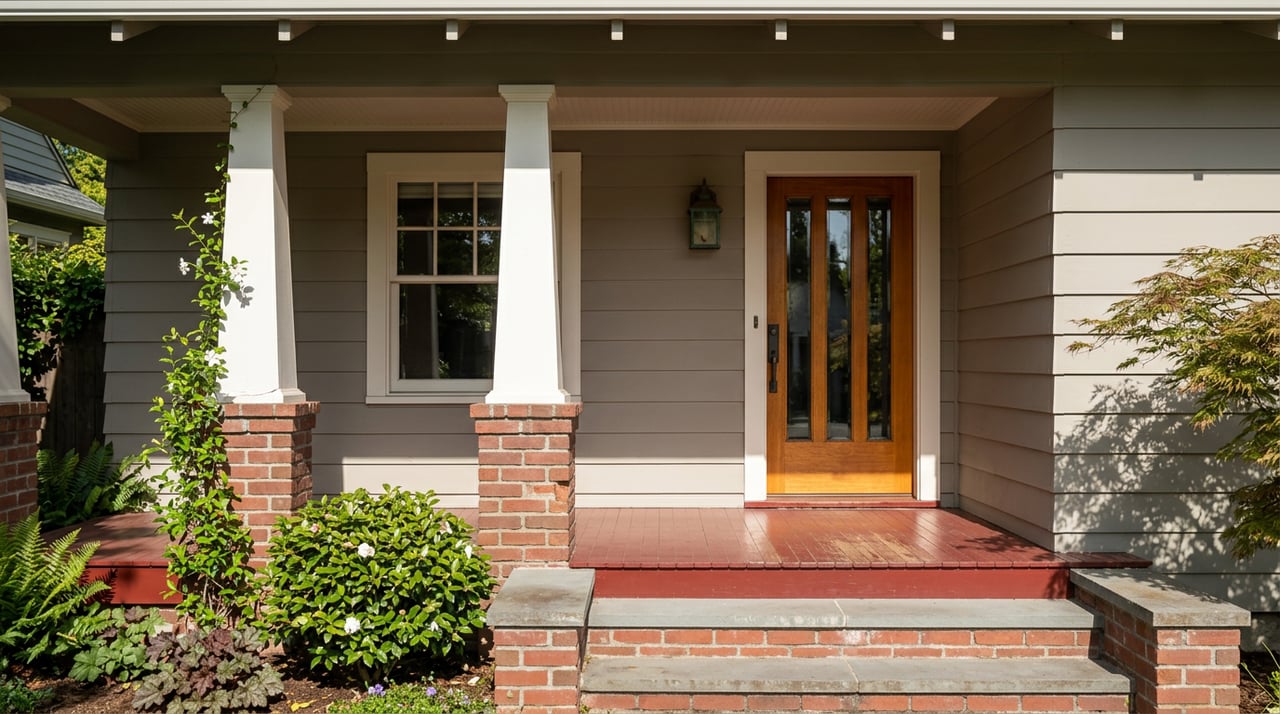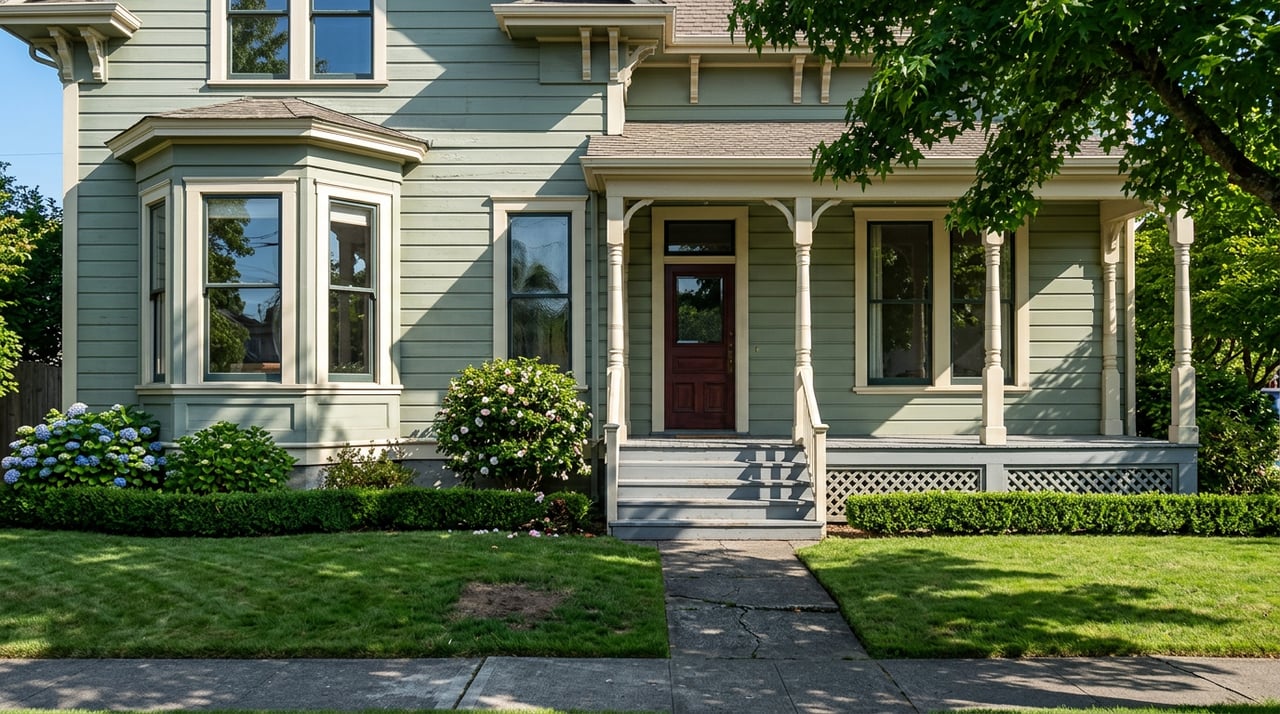
A buyer touring a Craftsman in Cleveland Heights or a Colonial Revival near Adams Point will sometimes ask why the property tax line on the listing sheet looks wrong. Not high. Low. Sometimes a third of what a similar house two blocks over pays. The listing agent explains it's under a Mills Act contract, the buyer nods, and the conversation moves on to the kitchen. That's the moment where most people, agents included, get the mechanics backward.
The assumption is that a Mills Act contract is a legacy discount, something the current owner locked in years ago that's been slowly used up. The truth, according to Oakland's own planning staff, runs the other direction. The tax benefit is often smallest for the owner who's held the house the longest and largest for whoever buys it next. If you're shopping historic Oakland, that reversal changes how you should read a listing, and it's worth understanding before you write an offer, not after.
Why the Discount Grows Instead of Shrinking
Oakland's Mills Act program works by taxing a historic property on its income potential instead of its market value. Instead of the standard approach where a sale resets your assessment to what you paid, a Mills Act property gets assessed using comparable rents, run through a capitalization rate to produce a lower taxable value. That's the entire mechanism the state legislature built in 1972 and every California city and county that opted in, Oakland included, still uses today.
Here's the part that doesn't show up on a listing sheet. In a 2024 presentation to Oakland's Planning Commission, city staff laid out exactly how this plays out over the life of a contract: for recent owners, the income-based assessment tends to sit well below market value, then it gradually climbs back toward a comparable market assessment as rents and sale prices in the area rise. In plain terms, the gap between what you'd pay without the contract and what you actually pay is widest right after a change of ownership and narrows the longer you hold the house.
That same 2024 staff report gives real numbers. Four new Mills Act applications that year, including a home known as the Vaughn-Wilson house and another called the Johanna Horton rental house, produced estimated first-year tax reductions ranging from $4,700 to $18,000 per property, about $41,000 combined. Oakland collects only 27.28 cents of every property tax dollar the county gathers, so the city's own share of that reduction worked out to roughly $11,275. That number lives in a staff memo, not a marketing flyer, which is exactly why most buyers never see it before they're already in escrow.
What Most People Assume vs. What Oakland's Numbers Show
| Common assumption | What actually happens |
|---|---|
| The tax break is a fixed perk baked into the price | The assessment recalculates over time and tends to favor whoever just bought |
| A long-held Mills Act home has the biggest discount | The discount is usually largest closest to a change of ownership |
| Buying the house means buying someone else's tax rate | You inherit a live, transferable contract with its own terms |
| Any older, charming home can get one | Only properties on Oakland's Local Register qualify, about 3% of buildings citywide |
What You Actually Inherit, Not Just the Tax Bill
A Mills Act contract runs with the property. When you buy a home that's already under one, you don't renegotiate it and you don't get a fresh start. You step directly into the seller's obligations, which include:
- A ten-year rehabilitation and maintenance work program that was approved and recorded years earlier, often before you were even looking at Oakland
- A requirement that the entire dollar value of your tax savings gets reinvested into that approved work, not saved or spent elsewhere
- Periodic inspections by the city and, potentially, the county assessor or state preservation staff to confirm the work is actually happening
- A breach penalty equal to 12.5 percent of the property's current market value if the contract is violated outright, a figure calculated at whatever the home is worth when the breach occurs, not what it was worth when the contract was signed
The contract also auto-renews annually, adding a year to the term each time, unless either the owner or the city files a notice not to renew, in which case it winds down over the balance of the existing ten-year term rather than ending immediately. None of this is negotiable at closing. If the seller has fallen behind on the approved work plan, that liability transfers to you along with the tax discount, which is exactly why a Mills Act disclosure deserves the same scrutiny as a roof inspection, not a passing mention on the listing sheet.
California's Transfer Disclosure Statement already requires sellers of one-to-four-unit residential property to state whether a home is historically designated or sits inside an existing or proposed historic district. That disclosure tells you the designation exists. It won't tell you whether the current work program is up to date or how much of the required reinvestment has actually been completed, so ask for the recorded contract and the most recent inspection notes directly.
The Application Calendar Nobody Mentions at a Showing
If the home you want isn't already under a Mills Act contract, you can't simply apply the week after closing and start saving that spring. Oakland runs this on a fixed annual cycle:
- Applications are accepted from January through May each year
- The property must already sit on Oakland's Local Register, which means a Landmark designation, Heritage Property status, or inclusion in an S-7 or S-20 preservation district. That register covers roughly 3 percent of buildings citywide, so most older homes in Oakland don't automatically qualify just for having character
- Staff and the Landmarks Preservation Advisory Board review the application and the proposed ten-year work plan
- If approved, the signed contract has to be recorded with Alameda County by December 31 of that year
Miss the May window and you're waiting until the following January to even file. That timeline matters if you're buying a landmark-eligible home with the specific goal of getting it into the program. Budget a full year, sometimes more, before the tax benefit actually shows up on a bill.
Where This Shows Up on the Ground in Oakland
The city's Local Register isn't evenly spread across neighborhoods. Cleveland Heights, the hillside pocket that includes the historic Haddon Hill and Peralta Heights subdivisions just east of Lake Merritt, carries a concentration of early-1900s architecture that shows up regularly in Mills Act applications. Adams Point tells a related story: a preservation group there organized in 1982 specifically to keep single-family homes from being redeveloped into condos and apartments, and that organizing history is part of why the neighborhood still has the housing stock that qualifies today. The Oak Center Historic District, an S-20 preservation zone in West Oakland, has its own Designated Historic Properties that have gone through this same process.
Oakland's program itself has grown steadily since the city made it permanent in December 2009 after a two-year pilot. By 2014 more than 30 properties had entered the program, and the Oakland Heritage Alliance recognized the effort with a Partners in Preservation Award that year. By 2018 the count had reached 61 contracts. By 2021 it stood at 92. That trajectory means more historic inventory in Oakland is entering this system every year, which means more buyers are going to encounter a Mills Act line item on a disclosure packet whether they were expecting it or not.
A Few Questions Worth Asking Before You Write an Offer
Can I apply for a Mills Act contract right after I close on a historic home? Only if the property is already on Oakland's Local Register. The application window runs January through May, review takes months, and the contract has to be recorded by December 31, so plan for a full cycle before any tax benefit appears.
What happens if I decide I don't want the obligations that came with the contract? You or the city can file a notice of non-renewal, but the existing contract still runs out over the remainder of its current ten-year term rather than ending immediately. Walking away from the terms outright triggers a penalty equal to 12.5 percent of the property's current market value.
Does every older or charming house in Oakland qualify? No. Only properties with a Landmark designation, Heritage Property status, or a place in an S-7 or S-20 preservation district can enter the program, and that Local Register covers about 3 percent of buildings citywide.
If you're looking at a historic property in Cleveland Heights, Adams Point, Oak Center, or anywhere else in Oakland's Local Register and want the actual recorded contract and work plan pulled before you write an offer, or you're sitting on a landmark home and want to know what a Mills Act application would realistically save you, Your East Bay Agent can walk through the numbers with you. Request a free home valuation and we'll start with what the county records actually say, not what the listing sheet implies.