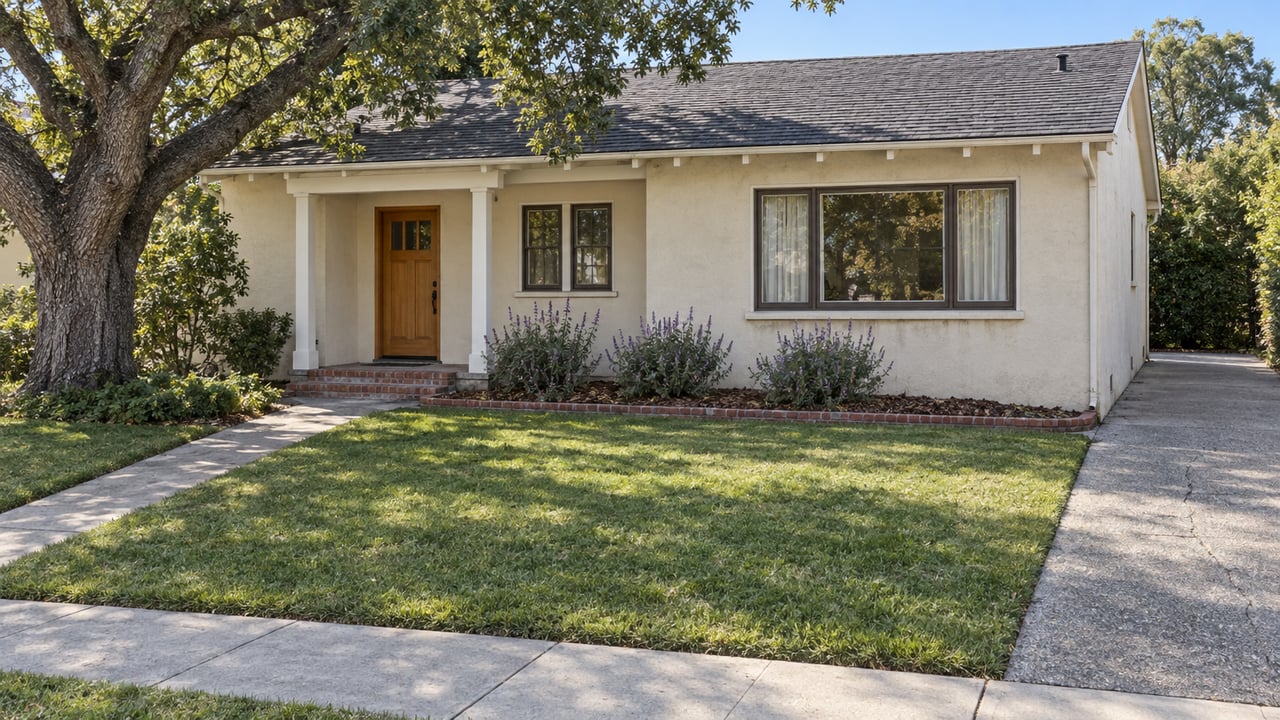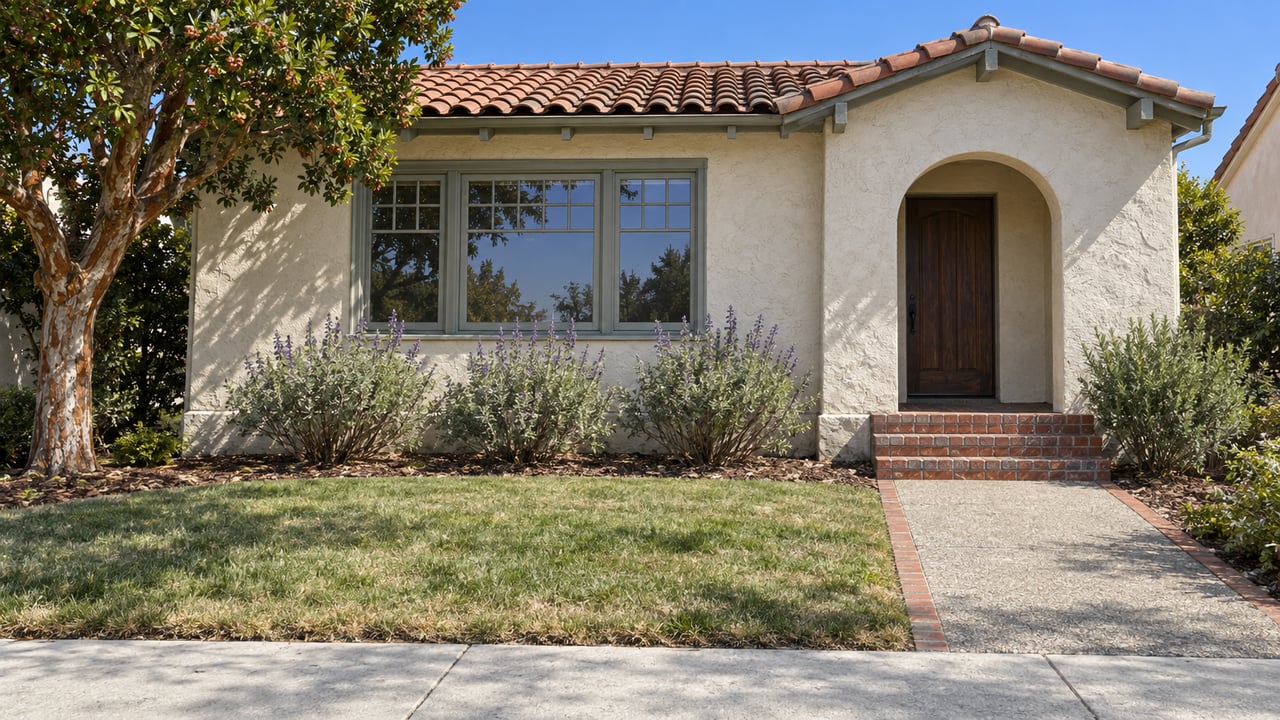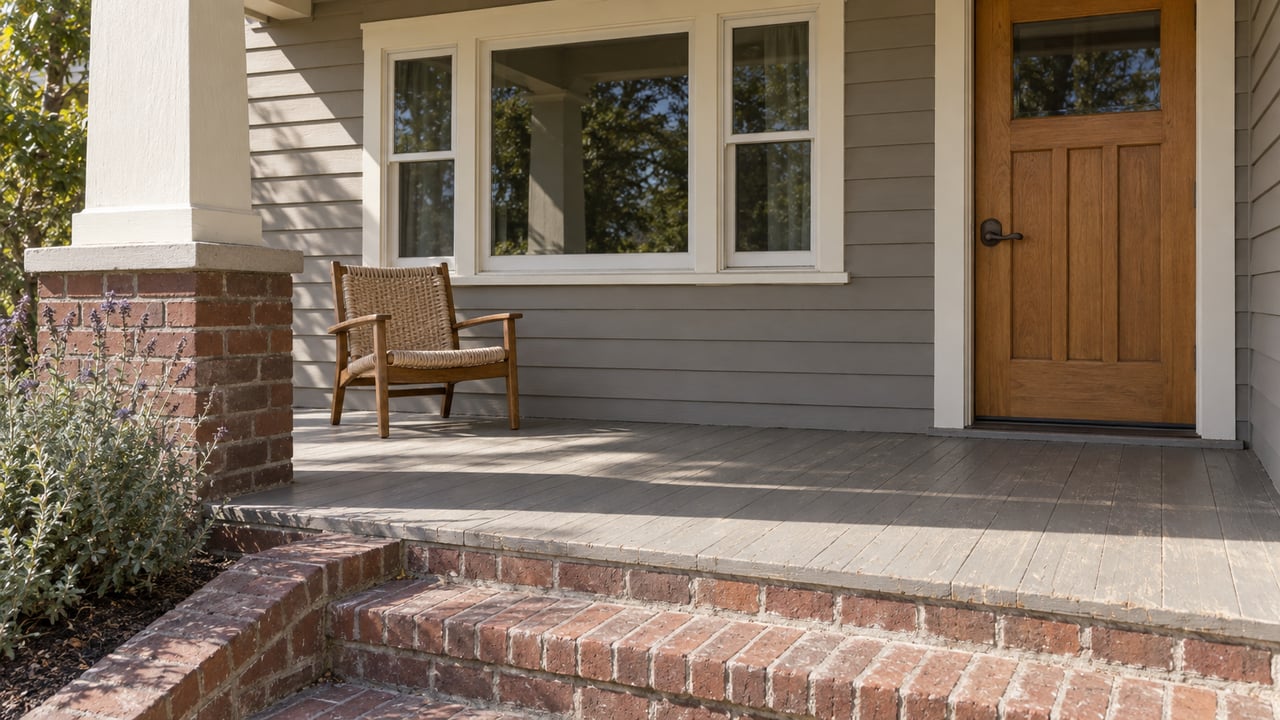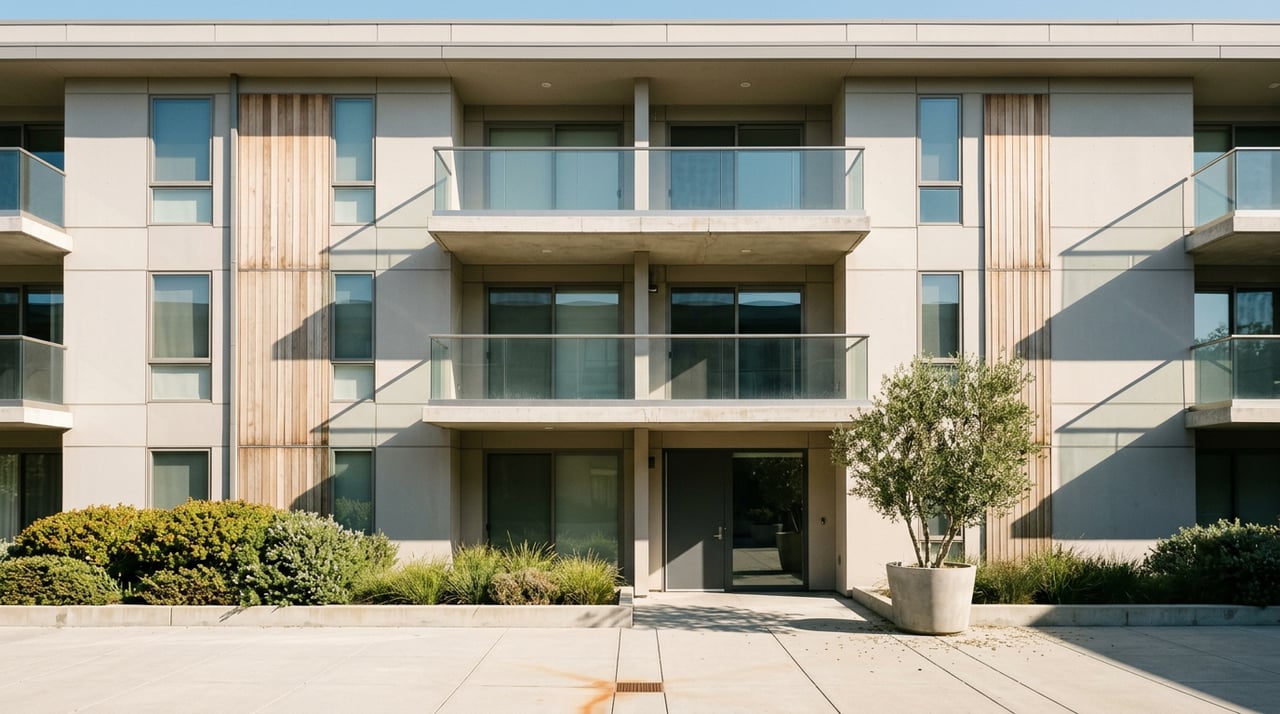
Walk the loop around Lake Merritt and you'll see the two Oakland condo markets standing side by side. There's the tall glass-and-concrete tower with the wraparound balconies catching afternoon light, and half a block away, the older mid-rise with the wood deck bolted onto its side, the kind that's been repainted more times than anyone can remember. Most buyers assume both buildings carry the same legal exposure when it comes to California's balcony inspection law. They don't, and the difference is now something you can ask about in writing before you write an offer.
Oakland's citywide condo median has held close to $500,000 through the first half of 2026, with April data putting the figure at $499,000 across 172 active listings and an average of 70 days on market. That's enough inventory that buyers touring Adams Point, Grand Lake, Lakeshore, and Eastlake, the four neighborhoods that ring the lake, have real choices to make between building types. The choice matters more than it used to, because the paperwork attached to each building type changed at the start of this year.
The Law Only Cares About Two Things: Wood and Height
Senate Bill 326 requires California condominium associations to inspect exterior elevated elements, balconies, decks, stairways, and walkways, on a recurring nine-year cycle. Rimkus reports that the first deadline was January 1, 2025, and it passed with no extension for condos, unlike the parallel apartment law which got pushed to 2026. But the statute isn't a blanket rule for every raised surface in a building. It applies specifically to elements supported substantially by wood or wood-based products that sit more than six feet above ground. Buildings where the elevated elements are concrete construction rather than wood-framed fall outside the requirement entirely, and Oakland's own guidance confirms that distinction explicitly for local exemption filings.
That single sentence, wood versus concrete, is the whole ballgame for a Lake Merritt buyer trying to figure out what they're walking into.
Why the Lakefront Towers Are a Different Story Than the Low-Rises
The tall towers most people picture when they think of Lake Merritt condos, buildings like the 21-story Essex at 1 Lakeside Drive, the 25-story Park Bellevue Tower on Bellevue Avenue, and the 13-story Van Buren Tower a block off the lake in Adams Point, are built in the style local balcony-inspection contractors describe as typical for this stretch of Oakland: mid-rise and high-rise condos across Uptown, Jack London Square, and Lake Merritt generally use suspended concrete balconies with topical membranes rather than wood framing. That construction style is a strong hint that a given tower may sit outside SB 326's scope, but it isn't proof. The only way to know for certain is to get it from the HOA in writing, because a mixed building with even one wood-framed walkway or fire escape can still trigger the requirement.
The buildings more likely to fall inside the law's reach are the smaller, older multi-unit properties scattered through the neighborhood, the kind built when redwood framing was standard practice rather than the exception. Local inspection firms that work across Oakland's building stock describe a wood deck inventory spanning multiple construction eras, each with its own ledger, fastener, and flashing standards, which is exactly the kind of variability an inspection is designed to catch.
Here's how that plays out for a buyer comparing two listings:
| Building profile | Typical construction | What it means for you |
|---|---|---|
| Tall lakefront high-rise (the Essex, Park Bellevue Tower style) | Suspended concrete balconies with membrane coatings | Often outside SB 326's scope, but the HOA still needs a filed exemption on record |
| Older mid-rise or smaller multi-unit building in Adams Point or Grand Lake | Wood-framed decks, stairways, or walkways | Squarely covered, inspection and reserve documentation should already exist |
Oakland Doesn't Let Buildings Off the Hook Just Because They're Exempt
Even a building that clears the wood-versus-concrete test isn't done with paperwork. Oakland requires every qualifying property, exempt or not, to submit documentation through the city's own Exterior Elevated Elements program. According to SLPM, if a building has no wood-framed elevated elements at all, the HOA still files an Exemption Declaration Form through the city's Online Permit Center, and the city confirms that exemption status by email. That confirmation email is the artifact a buyer should ask to see.
In practical terms, this means there is no version of "the building is exempt, so there's nothing to check." There is always a document, either an inspection report or an exemption confirmation, and asking which one exists for a specific building is a fair question to put to a listing agent or HOA management company before you're deep into a contingency period.
What Changed for Buyers on January 1, 2026
Before this year, an SB 326 inspection report lived in the HOA's files, and a buyer had to know to ask for it. That changed with a new amendment folding the most recent exterior elevated element inspection report directly into the standard resale disclosure package required under California Civil Code section 4525, the same packet that already covers current assessments, pending fee changes, and unresolved violations. Structural condition reporting is now a routine part of the escrow review for common interest developments rather than an optional add-on a sharp buyer's agent has to chase down.
That shift is showing up in financing conversations too. Industry guidance for HOA boards this year has flagged that lenders are increasingly asking for proof of balcony compliance before closing, which means an association that can't produce documentation, in either direction, risks stalling a sale that has nothing to do with the unit itself.
Five Questions to Put in Writing Before You Waive a Contingency
- Does the HOA have a completed SB 326 inspection report, or an exemption confirmation email from the city of Oakland?
- If an inspection was completed, when, and were any repairs flagged?
- Has the reserve study been updated to reflect the inspection findings?
- Has the HOA levied, or discussed levying, a special assessment tied to exterior elevated element repairs?
- Can the HOA's management company confirm in writing whether the building's balconies are wood-framed or concrete?
The Money Question Behind the Paperwork
Even when a building is squarely covered by SB 326 and everything checks out, the inspection can still change the math on what you're buying. According to Pratt Attorneys, California law caps a special assessment at 5% of an association's budgeted gross expenses in a given year without a member vote, so if an HOA's annual budget runs $500,000, the board can levy up to $25,000 without putting it to owners for approval. Anything larger requires a vote. That cap is worth understanding before you close, because a reserve study that comes back short after a balcony inspection is exactly the kind of finding that leads a board toward that 5% threshold, sometimes more than once.
Monthly HOA fees across Oakland generally run in the $200 to $600 range depending on the building's age and amenities, and that range is the baseline you're budgeting against before any special assessment enters the picture. A building with a well-documented, well-funded reserve is a very different holding cost than one that's been deferring maintenance and is about to find out what that costs.
A Few Questions We Hear Often
Does this apply to condos outside the immediate lakefront? Yes. The wood-versus-concrete and six-foot thresholds apply the same way to qualifying buildings anywhere in Oakland, not just the towers directly on the water.
If a building missed the original 2025 deadline, does that mean I shouldn't buy there? Not automatically, but it's a reason to ask more questions, not fewer. A missed deadline paired with an unfunded reserve is a different risk profile than a missed deadline where the board has already engaged an inspector and has a timeline in hand.
Who actually pays for repairs if the inspection finds a problem? Under California's Davis-Stirling framework, exterior elevated elements are common area, so the HOA is responsible for repairs unless the CC&Rs say otherwise, which usually means the cost gets spread across owners through dues or a special assessment rather than falling on the seller alone.
Buying or selling a condo near the lake means dealing with an HOA file, not just a listing sheet, and the file looks different depending on which side of the wood-and-height line a building falls on. If you're weighing a specific building around Lake Merritt, Uptown, or Jack London Square and want a second set of eyes on what the HOA documents actually say before you write an offer, reach out to Your East Bay Agent. We'll help you ask the right questions of the right people before you're locked into a timeline.
This article is general information, not legal, tax or financial advice. Consult a qualified professional about your situation.