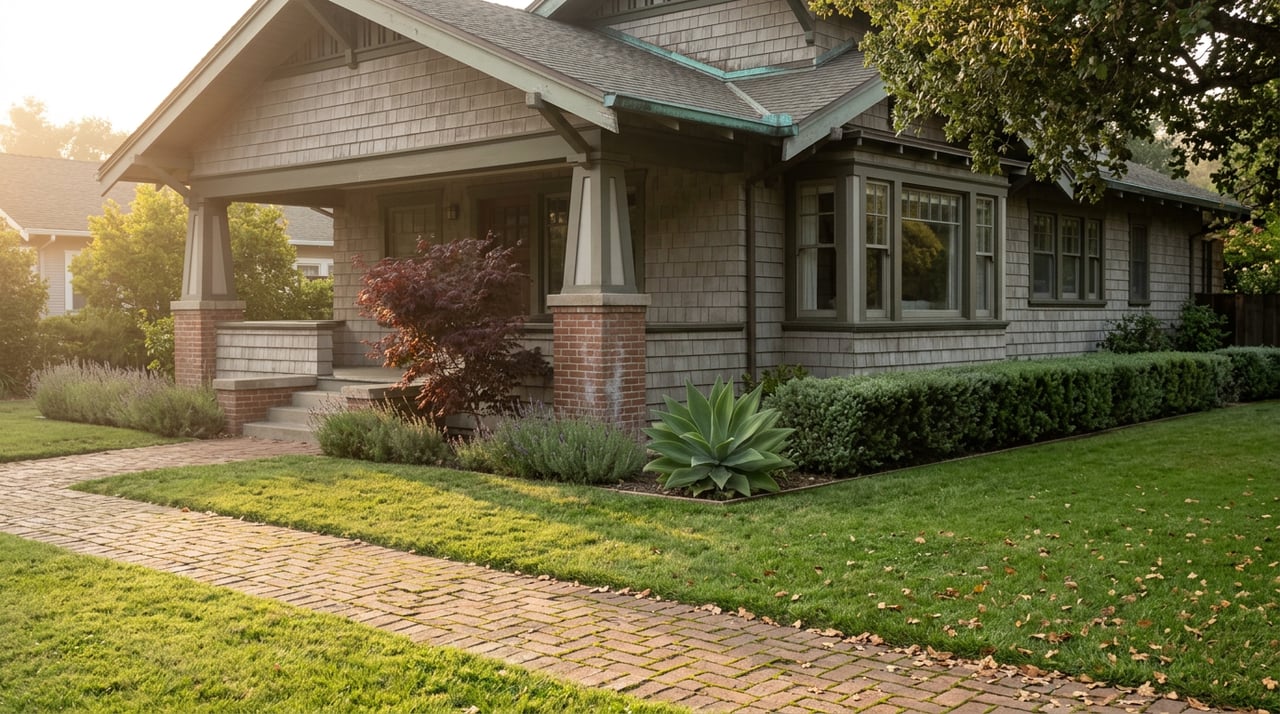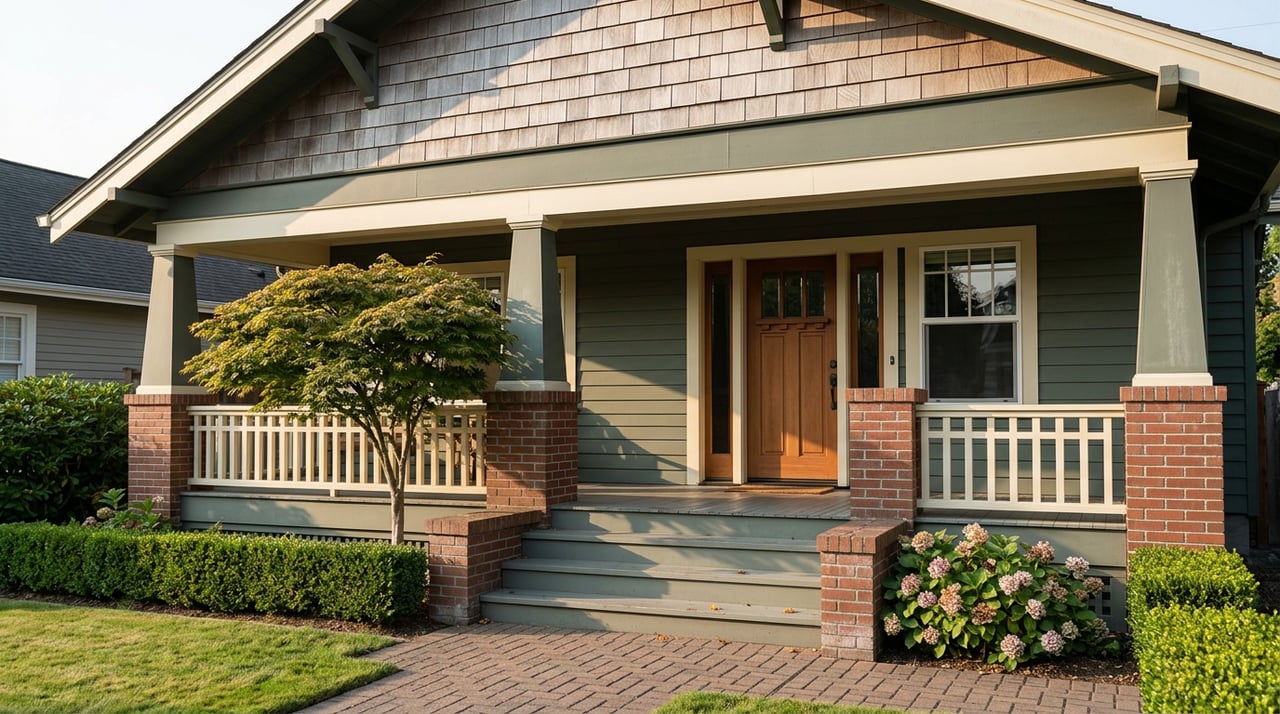
Twelve dollars per thousand. That's the number that shows up on an Alameda seller's net sheet, and on paper it sounds like the kind of rate a city council picked because it needed the money more than it needed to be reasonable. Sellers who've done any homework on Oakland's transfer tax structure, or heard a friend complain about Berkeley's, sometimes brace for Alameda's flat rate to be worse. It isn't. Once you run the math against a real recent sale, Alameda's flat structure comes out cheaper than both of its tiered neighbors at almost every price point where character homes here actually trade.
That's the thing worth knowing before you list, not after an offer lands and someone starts asking who's covering what.
The Number Nobody Explains Well
Alameda County's documentary transfer tax is $1.10 per $1,000 of sale price, the same rate every county in California charges under state law. On top of that, the City of Alameda layers its own municipal transfer tax of $12.00 per $1,000, and unlike several of its East Bay neighbors, that rate doesn't change based on how much the home sold for. A $500,000 condo and a $3 million Victorian pay the same 1.2% city rate. Combined with the county base, that's $13.10 per $1,000, or 1.31%, applied evenly across the board.
Here's what that looks like against real Alameda sales from the two weeks ending September 13, 2026, as tracked in the Alameda Post's biweekly sold-properties report:
| Sale price | Combined Alameda transfer tax (county + city) |
|---|---|
| $475,000 (301 Broadway, Unit 107) | $6,223 |
| $1,194,950 (median sale for the period) | $15,654 |
| $3,164,900 (1612 San Antonio Avenue, the period's top sale) | $41,460 |
That top figure, on the two-week period's highest sale, is a real number attached to a real address. It's also where the comparison to Oakland and Berkeley gets interesting.
What the Same Sale Would Cost Somewhere Else
Oakland's city transfer tax, adopted by voters under Measure AA, doesn't work like a normal tax bracket. It's a cliff structure: whatever rate applies to your price range gets charged on the entire sale price, not just the portion above the threshold. The brackets run 1% up to $300,000, 1.5% from $300,001 to $2,000,000, 1.75% from $2,000,001 to $5,000,000, and 2.5% above that. Cross a threshold by a dollar and the higher rate applies to the whole number, not the marginal amount.
Run that same $3,164,900 sale through Oakland's schedule. It falls in the $2,000,001 to $5,000,000 bracket, so the city tax alone is 1.75% of the full price, or $55,386. Add the county's $1.10 per $1,000 and the total climbs to roughly $58,867.
Berkeley uses a marginal system instead, closer to how federal income tax brackets work; only the portion of the price above $1,700,000 gets taxed at the higher rate. For a $3,164,900 sale, that means 1.5% on the first $1.7 million and 2.5% on the remaining $1,464,900. City tax comes to about $62,123, and the total with the county base lands near $65,604.
Set the three side by side on that one real sale:
| City | Combined transfer tax on $3,164,900 |
|---|---|
| Alameda (flat $13.10/$1,000) | $41,460 |
| Oakland (cliff-tier, 1.75% bracket) | $58,867 |
| Berkeley (marginal brackets) | $65,604 |
The gap isn't small. A seller closing that exact sale in Oakland instead of Alameda would owe roughly $17,400 more in transfer tax. In Berkeley, over $24,000 more. That's not a rounding difference, it's the kind of number that changes what a net sheet looks like.
The same pattern holds at the median. On the $1,194,950 sale, Alameda's total comes to about $15,654. The same price in Oakland or Berkeley, both landing in their 1.5% bracket at that level, comes to roughly $19,239, about $3,585 more.
Why the Flat Rate Wins for Alameda's Price Range
The mechanism here isn't complicated once you see it. Alameda's city rate of 1.2% sits below Oakland's 1.5% bracket and well below both cities' higher tiers. Since most homes selling in Alameda right now, including the character homes and Victorians that make up a large share of the market, land well above the $300,000 threshold where Oakland's lowest bracket would otherwise beat Alameda's flat rate, Alameda's simplicity ends up working in the seller's favor rather than against it.
It also removes a kind of risk that tiered cities carry. In Oakland, a seller pricing a home near $2 million has to think about the cliff. Accept an offer at $2,000,001 instead of $1,999,999 and the entire sale price gets taxed at 1.75% instead of 1.5%, a swing worth tens of thousands of dollars for a two-dollar difference in price. Alameda sellers don't have that problem. The rate is the same whether the home sells for $1.9 million or $2.1 million, which means the transfer tax number is fully knowable the day you decide to list, long before any offer comes in.
Who Actually Pays It
Transfer tax in Alameda County is negotiable between buyer and seller. There's no state law that assigns it to one side automatically. Local custom in the City of Alameda has typically leaned toward sellers covering both the county and city portions, but custom is a starting point for negotiation, not a rule written into the contract. What ends up on the closing statement is whatever the purchase agreement says.
The number is predictable well before a buyer ever sees the listing. That makes it a pricing-strategy conversation, not a post-offer surprise.
A few exemptions exist too. Transfers into or out of a revocable living trust, transfers between spouses with no money changing hands, and outright gifts generally don't trigger the tax. Every deed still has to carry a transfer tax declaration at recording, even when the exemption brings the amount to zero, so this isn't something to leave for the title company to sort out at the last minute.
Questions Worth Asking Before You List
- Has your agent modeled the combined county and city transfer tax into your net sheet using your actual expected sale price, not a rounded estimate?
- If you're pricing near a round number like $2 million or $5 million, does your agent understand that Oakland's cliff structure doesn't apply to Alameda properties the same way, and has that been factored into comparable sales you're using?
- Does your purchase contract draft specify who pays the county portion and who pays the city portion separately, or does it lump them together?
- If your sale might qualify for a trust or interspousal exemption, has that basis been confirmed and documented ahead of recording, not discovered at the title company on closing day?
A Few Questions We Hear Often
Is the transfer tax the same as property tax? No. Property tax is an annual bill tied to your assessed value. Transfer tax is a one-time charge collected at the moment a deed records, calculated on the sale price.
Can the rate change between when I list and when I close? The rate itself is set by ordinance and doesn't fluctuate with your specific sale, but city councils can vote to raise rates over time. Always confirm the current schedule with your escrow officer before finalizing your net sheet.
Does this apply to every kind of transfer, or just traditional sales? It applies to grant deeds, most conveyances, and even long-term leaseholds of 35 years or more. Gifts, trust transfers, and certain interspousal transfers can be exempt, but the exemption basis has to be documented on the deed itself.
Transfer tax is one line on a much longer closing statement, but it's one of the few numbers a seller can know with certainty before a single showing happens. For character homes and higher-value listings, where the dollar amounts get real fast, that certainty is worth building into your pricing strategy from day one, not discovering during escrow.
If you're weighing what a sale in Alameda actually nets after every cost is accounted for, Your East Bay Agent can walk through the full math for your specific address and timeline. Request a Free Home Valuation and get a net sheet built on real numbers, not a rounded guess.